If geology explains how the Sierra del Divisor was formed, its diverse landscapes and ecosystems reveal why this region is considered one of the most biodiverse areas in all of the Amazon.
Most people picture the Amazon rainforest as an endless, uniform canopy stretching to the horizon. However, the reality is far more complex. In the Sierra del Divisor, dramatic changes in relief, diverse soil compositions, water availability, and local microclimates have created an extraordinary diversity of natural environments coexisting within a single territory.
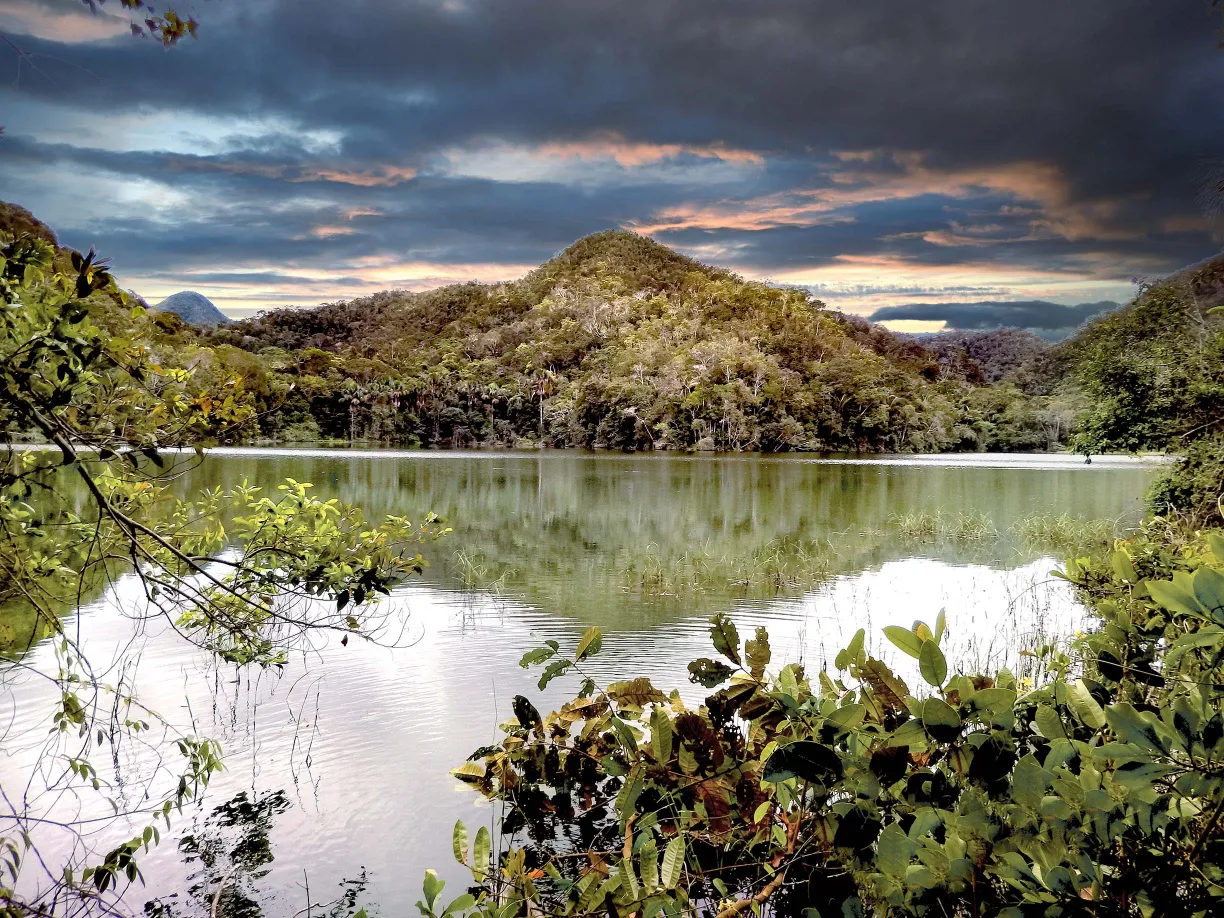
Isolated forested mountains, ancient volcanic formations, rare dwarf forests, vast palm swamps (aguajales), crystal-clear rivers, hidden forest streams, secluded lagoons, and seasonal flooded forests form an ecological mosaic found almost nowhere else in the Western Amazon. This extraordinary environmental diversity explains why the region harbors an exceptional concentration of rare, understudied, and endemic species of flora and fauna.
A Landscape Unlike Anywhere Else in the Amazon
The vast majority of the Amazon basin consists of low-lying plains with minimal elevation changes, where massive rivers have deposited sediment over millions of years to create a relatively uniform terrain. The Sierra del Divisor shatters this pattern entirely.
Here, the horizon is dominated by a succession of rugged ridges, steep hills, rocky crests, and ancient geological formations rising hundreds of meters above the surrounding canopy. Although much lower than the Andes, these elevation changes radically alter local conditions. By shifting temperature, humidity, rainfall, and soil drainage, they allow highly contrasting ecosystems to thrive just a few kilometers apart.
Ancient Volcanic Formations
One of the most fascinating geological features of the Sierra del Divisor is the presence of ancient volcanic formations. While there are no active volcanoes in the region today, geological studies have identified clear evidence of ancient volcanism that occurred millions of years ago, when the tectonic setting of South America was vastly different from today.
Today, these ancient volcanic systems are extinct. Tropical erosion has softened their original forms, and the dense rainforest canopy has reclaimed the landscape. Nevertheless, several hills still retain distinct conical profiles that reveal their volcanic origins. This makes the Sierra del Divisor one of the very few regions in the Amazon Basin where evidence of ancient volcanism can still be observed. These unique geological formations directly influence soil mineral levels, dictating the specialized plant species that can grow there.
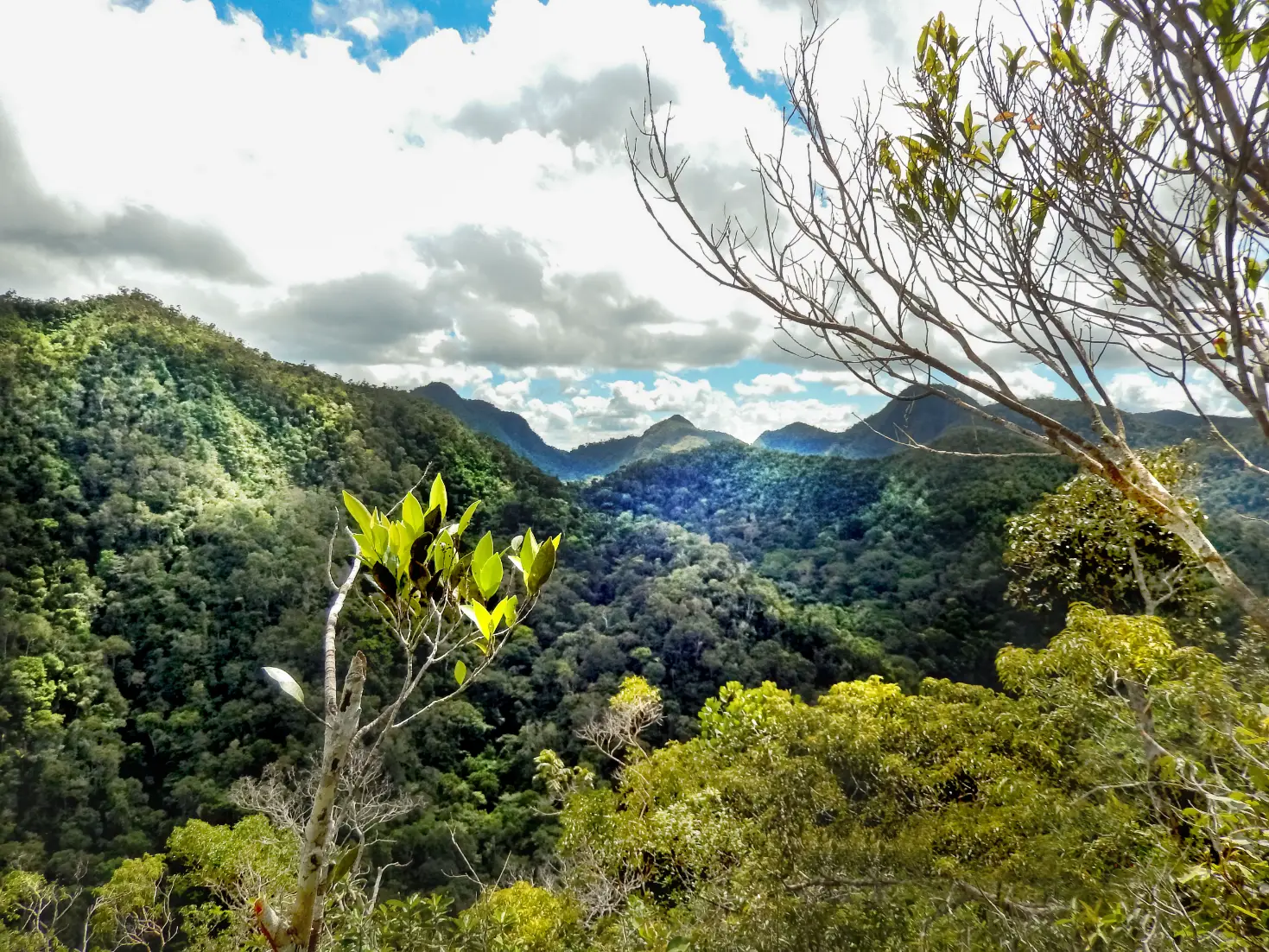
Isolated Mountains: Ecological Islands in a Green Ocean
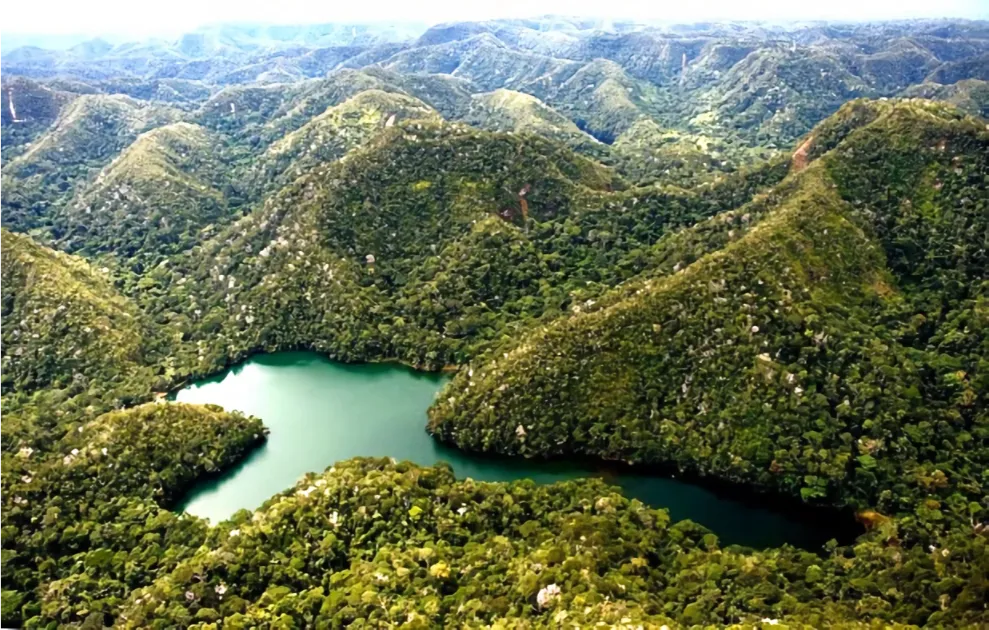
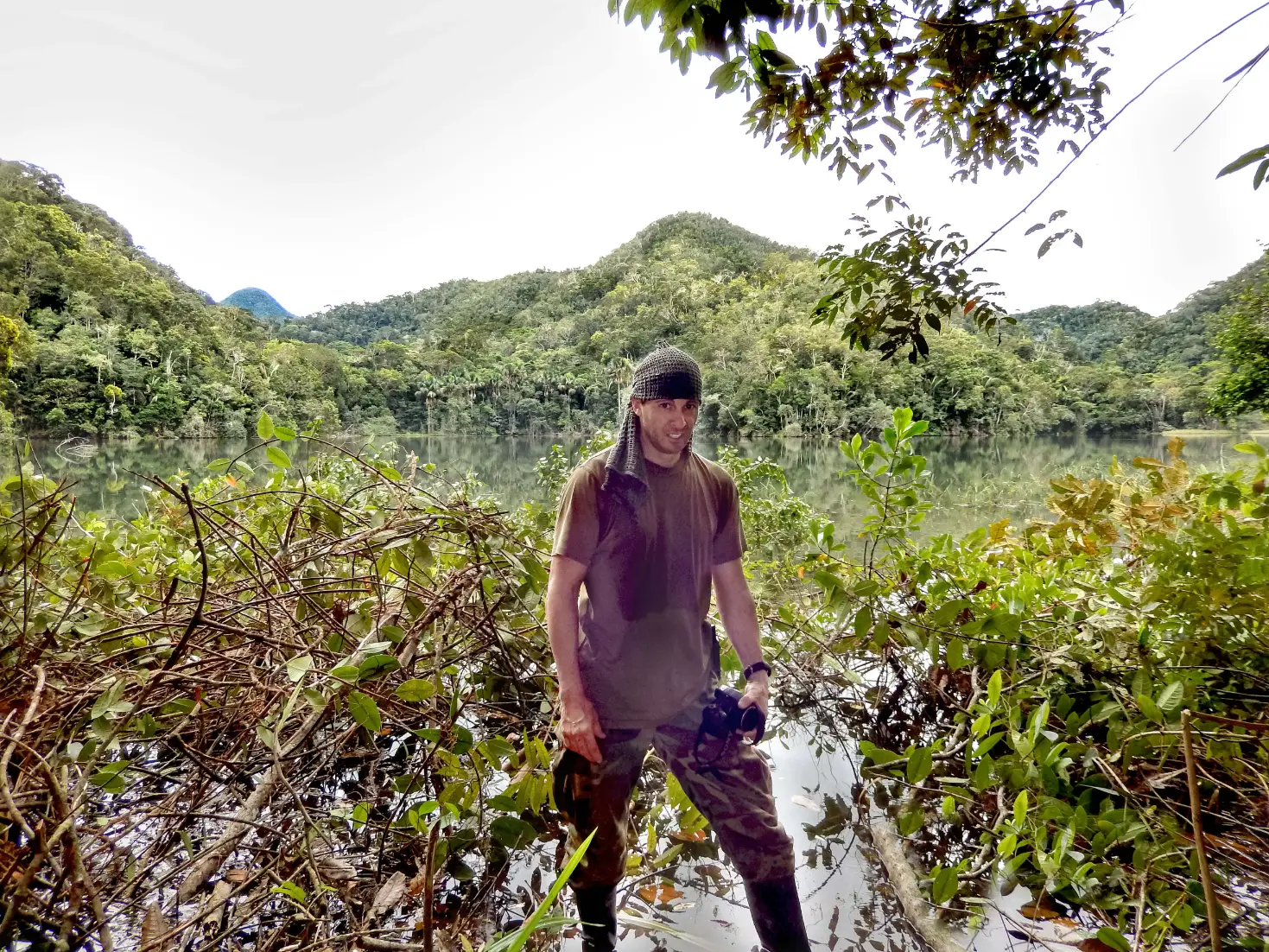
Perhaps the most iconic image of the Sierra del Divisor is its mountains covered in a seamless blanket of tropical forest, rising like solitary giants from the lowland plains.
From above, these ridges look like massive green islands separated by deep valleys and winding rivers.
These highlands act as true ecological islands. As altitude increases, the environment shifts, and unique plant species appear that cannot survive in the lowlands. In certain areas, the vegetation becomes stunted and dense due to poor soil nutrients and constant exposure to wind and moisture, giving rise to highly specialized endemic flora that cannot be found anywhere else.
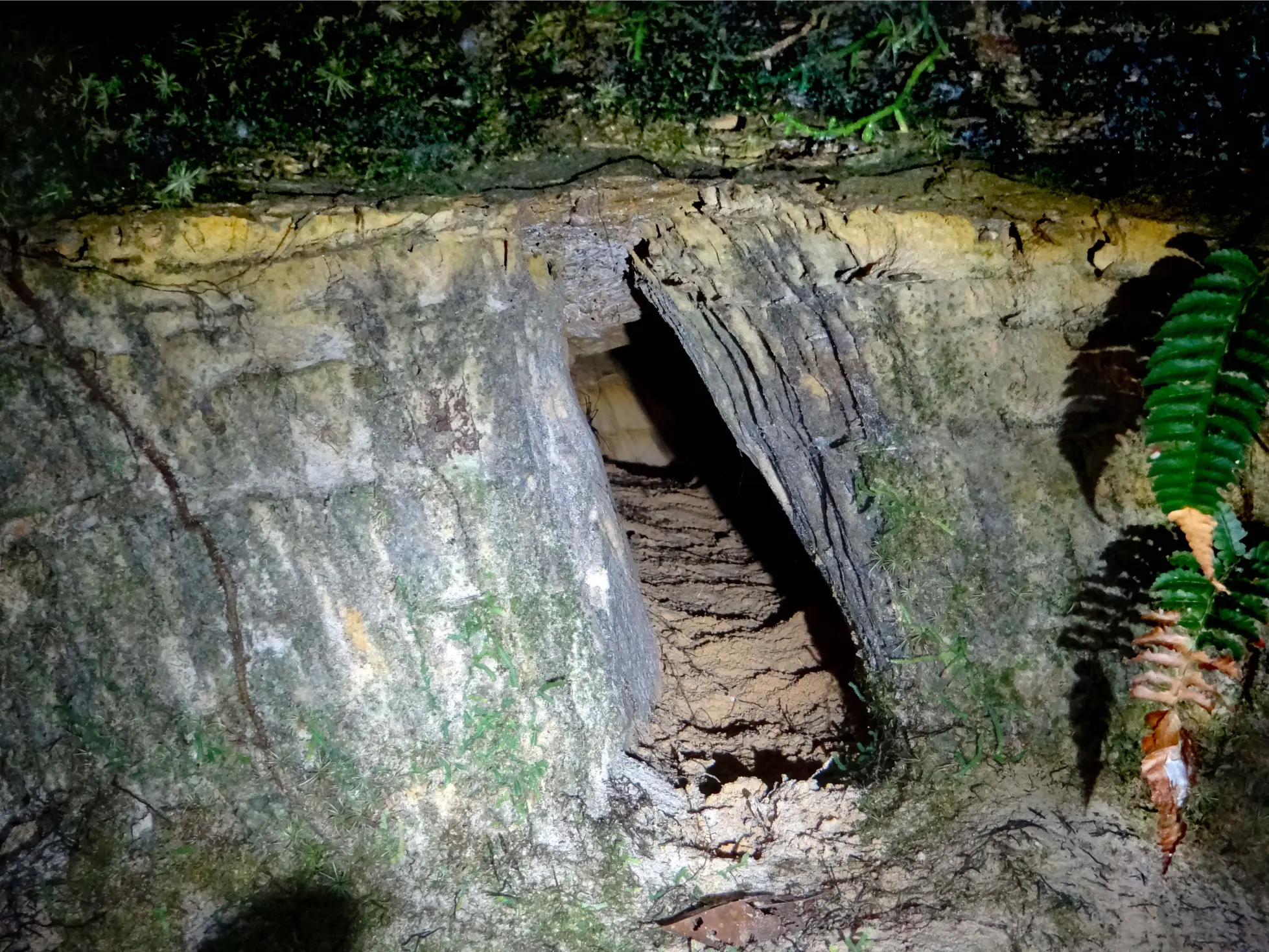
Unique Ecosystems of the Sierra del Divisor
1. Amazonian Dwarf Forests
One of the most fascinating and least understood ecosystems in the region is the dwarf forest (varillal). Unlike the towering giants of the surrounding jungle, the trees here rarely exceed a few meters in height. These are not young forests; rather, these trees remain small due to extremely nutrient-poor soils, restricted drainage, and constant wind exposure. The flora has developed incredible evolutionary adaptations to grow slowly and survive in this nutrient-poor environment.
2. Flooded Forests
While much of the Sierra del Divisor consists of high, dry terra firme forest, the lower-lying areas are governed by the annual pulse of the Amazon’s rivers. During the wet season, rising waters flood vast areas for months, transforming the landscape.
Plants and animals here have adapted to survive with submerged roots, synchronizing their fruiting cycles with the floods, which allows fish, primates, and birds to feed and disperse seeds throughout the flooded plains. This constant rhythm of rising and falling waters makes flooded forests one of the most dynamic and biologically productive ecosystems in the Amazon, playing a fundamental role in sustaining local biodiversity.
3. Aguaje Palm Swamps (Aguajales)
Among the most characteristic wetlands of the Sierra del Divisor are the aguajales, vast palm swamps dominated by the Aguaje palm (Mauritia flexuosa). In this region, these ecosystems are essential water regulators: they act as giant natural sponges, storing vast quantities of water during the wet season and slowly releasing it during dry months to maintain the flow of local streams. Additionally, their waterlogged soils store immense amounts of carbon, making them vital tropical ecosystems for global climate regulation.
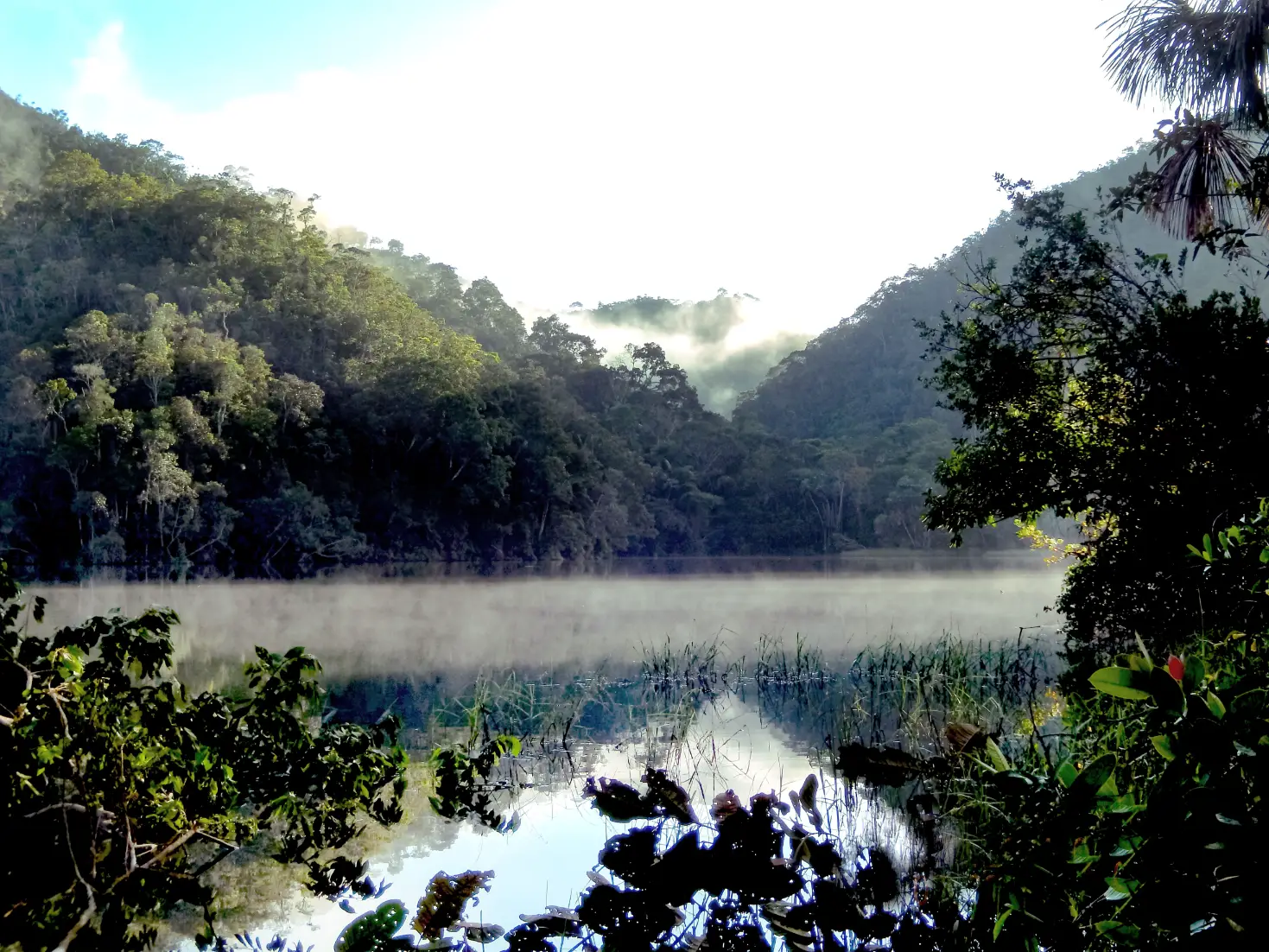
Aquatic Systems: Crystal-Clear Rivers, Forest Streams, and Secluded Lagoons
- Crystal-Clear Rivers: Unlike the sediment-heavy, muddy rivers typical of the Amazon, several rivers in the Sierra del Divisor are exceptionally clear. Flowing over ancient rocks and stable mountain soils, they carry almost no suspended sediment, offering incredible underwater visibility. This clear-water environment supports highly specialized aquatic life among rapids and natural pools.
- Forest Streams: Small, shaded streams that flow from the highlands, serving as crucial ecological corridors. The banks of these streams remain consistently humid throughout the year, creating microclimates that provide ideal conditions for ferns, mosses, orchids, and countless amphibian species that rely on them for breeding.
- Secluded Lagoons: Tucked away in the deep forest, these peaceful, current-free lagoons are rich in aquatic vegetation. They serve as quiet sanctuaries for caimans, river turtles, waterbirds, and fish, providing safe breeding grounds away from the main river channels.
The Rain Shadow Effect
Even though these mountains are low compared to the Andes, they are high enough to influence the local weather. As warm, moisture-laden air traveling across the Amazon basin hits these ridges, it is forced to rise, cooling and condensing into heavy rainfall on the windward slopes. As the air crosses and descends the opposite side, it loses its moisture, creating a drier microclimate on the leeward slopes.
This rain shadow effect creates subtle localized climate zones that further diversify the types of vegetation and habitats found within the park.
Together, these diverse ecosystems create an intricate ecological network that supports one of the highest concentrations of biodiversity in the Amazon rainforest. The interaction between geology, climate, water, and vegetation has shaped an environment where countless species have evolved and continue to thrive, making the Sierra del Divisor one of South America’s most remarkable natural treasures.
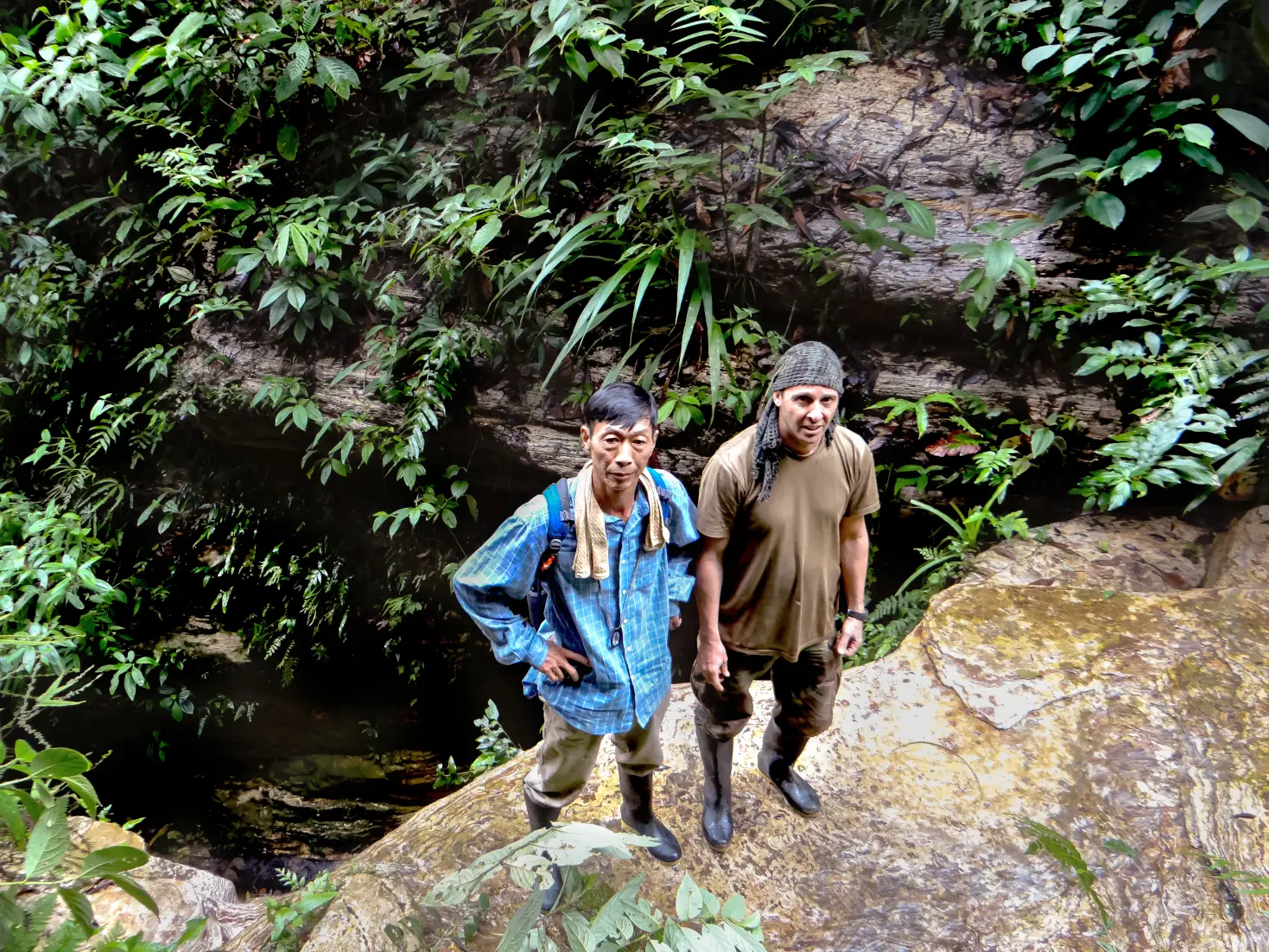
Conclusion
The Sierra del Divisor demonstrates that the Amazon is far from being a uniform landscape. Its isolated mountains, ancient geological formations, specialized forests, wetlands, crystal-clear rivers, and hidden lagoons form a complex ecological mosaic unlike anywhere else in the Amazon rainforest. Understanding how these ecosystems interact is essential to appreciating and protecting one of the last truly wild frontiers on Earth.
👉 In Part 3
The Wildlife of Sierra del Divisor: We will dive deep into the extraordinary wildlife inhabiting this remote Amazonian wilderness, from large mammals and primates to rare birds, reptiles, amphibians, and fish. Discover why the Sierra del Divisor is considered one of the continent’s most critical biodiversity hotspots and a living laboratory for discovering new species.