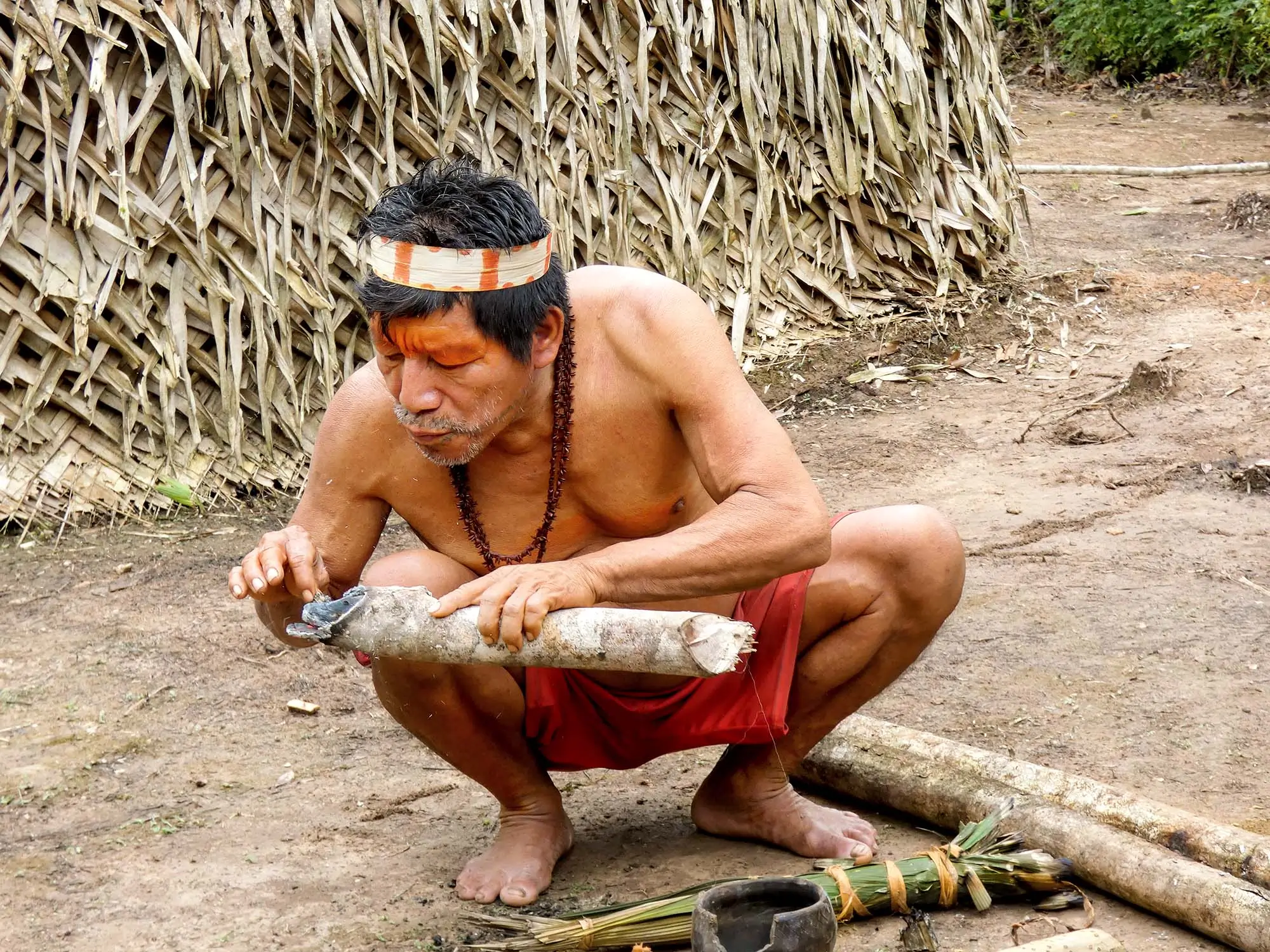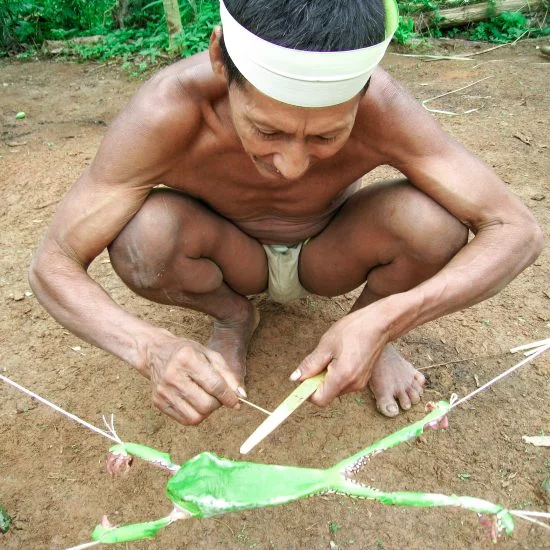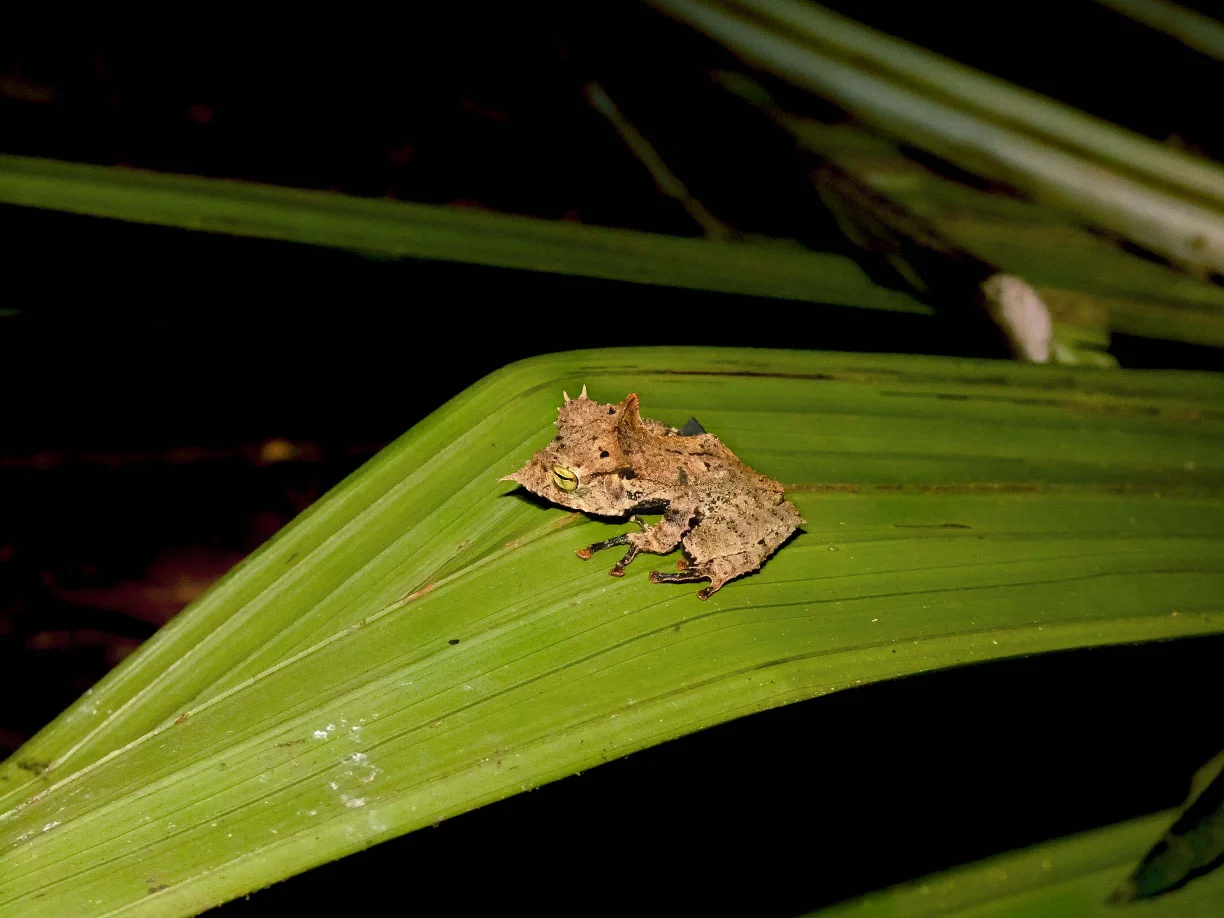
While the remarkable geology and diverse ecosystems of Sierra del Divisor National Park provide the foundation, it is the extraordinary wildlife that truly brings this remote wilderness to life.
Isolated from much of the Amazon Basin by its rugged terrain, Sierra del Divisor has become a vast evolutionary sanctuary. It is recognized as one of South America’s most important biodiversity hotspots, supporting an exceptional variety of species, many of which are rare, threatened, or found nowhere else on Earth. For scientists, conservationists, and expedition travelers alike, the park represents a living laboratory and one of the last great refuges of truly wild Amazonian nature.
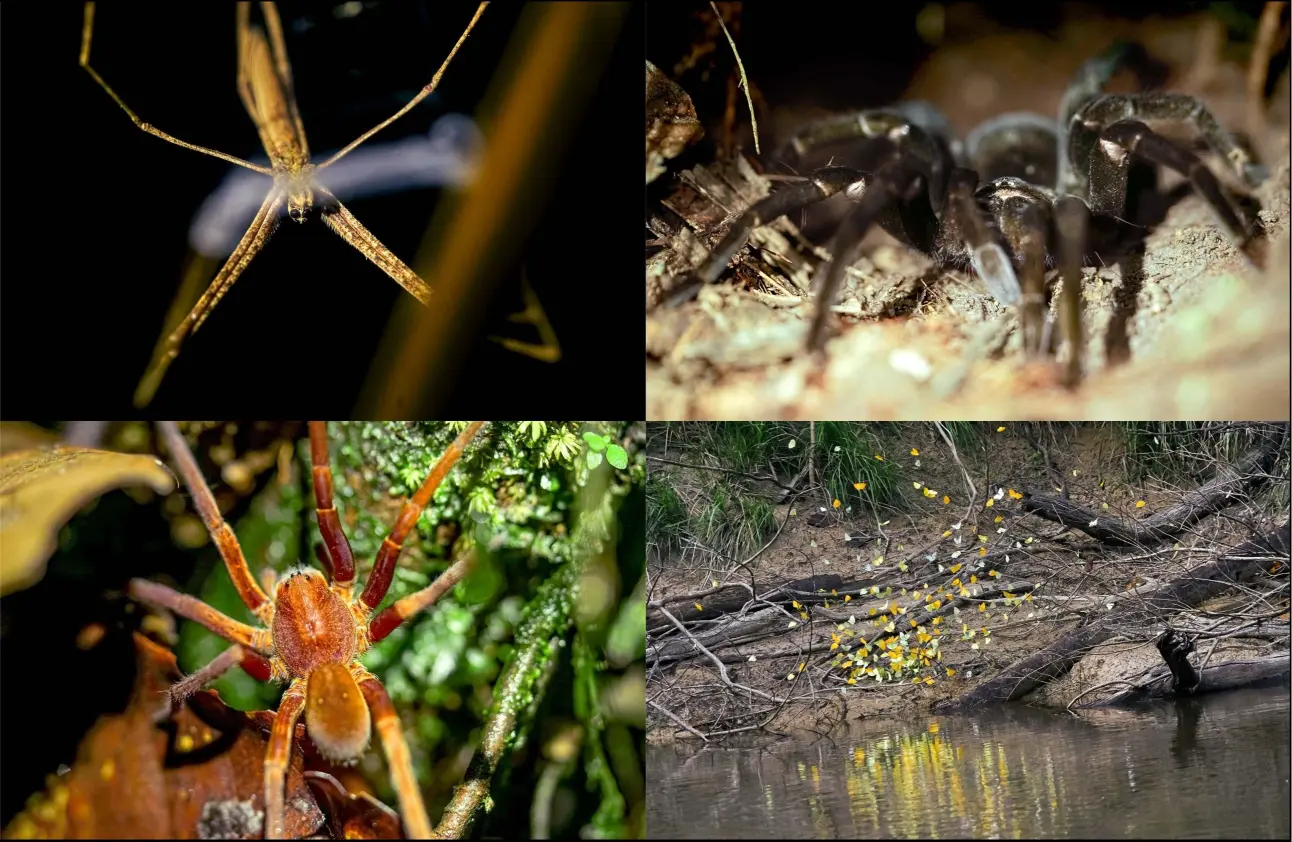
Peru’s Greatest Stronghold for Primates
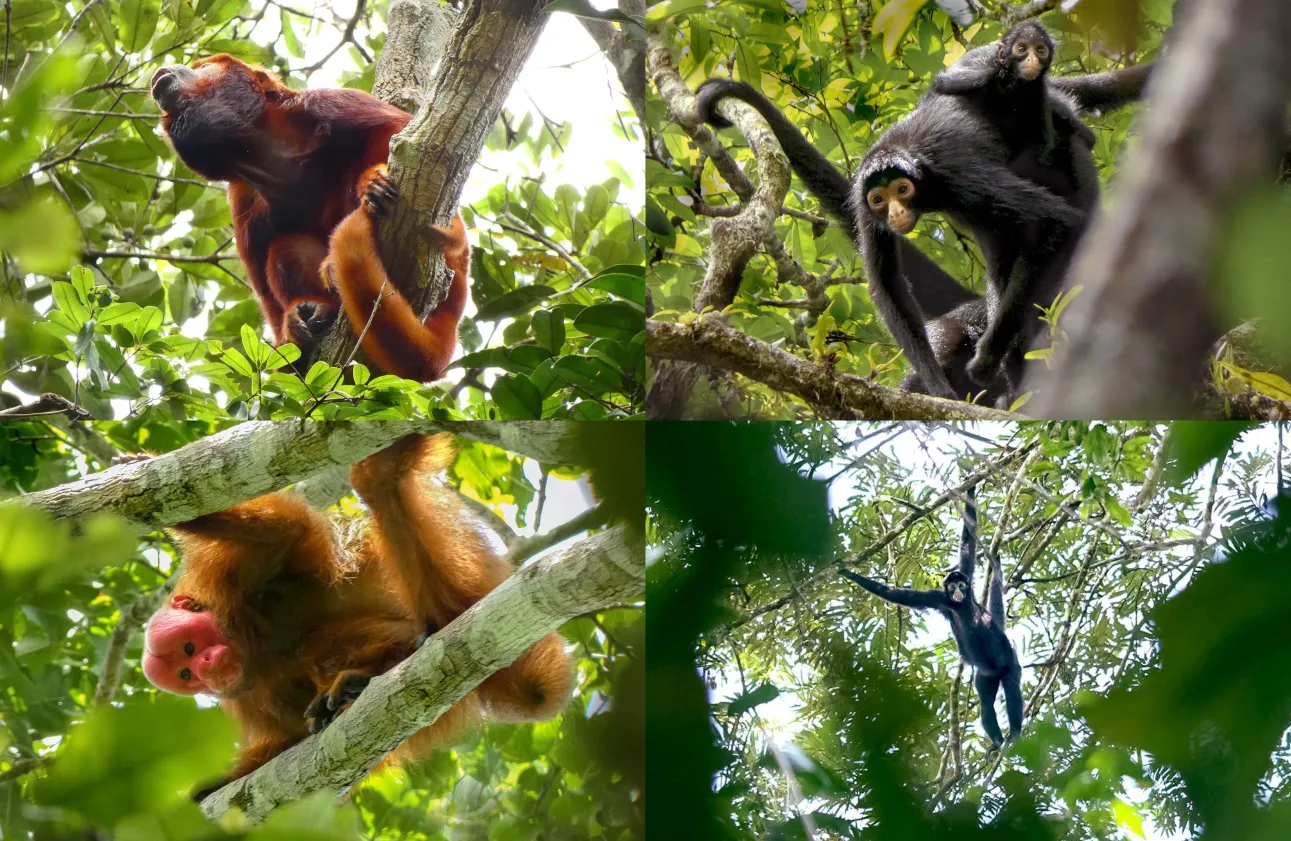
If one group of animals best represents the biological richness of Sierra del Divisor, it is undoubtedly the primates. The park is home to 16 species of monkeys, the highest primate diversity recorded in any protected area in Peru.
The Ucayali Bald Uakari (Cacajao calvus ucayalii)
Also known locally as the red uakari (guapo colorado), this remarkable monkey has become one of the symbols of Sierra del Divisor. Its bright crimson, hairless face and short tail make it one of the most distinctive primates in the Amazon.
The Ucayali bald uakari depends almost entirely on pristine seasonally flooded forests (tahuampas), making it especially vulnerable to habitat degradation. The extensive undisturbed wetlands within the park provide one of its most important remaining strongholds.
A Refuge for Rare Primates
Beyond the uakari, Sierra del Divisor protects several other uncommon primate species, including:
- Goeldi’s monkey (Callimico goeldii)
- Peruvian spider monkey (Ateles chamek)
- Equatorial saki (Pithecia aequatorialis)
The abundance and diversity of monkeys found throughout the park are strong indicators of an exceptionally healthy, intact rainforest ecosystem.
Apex Predators and Large Mammals
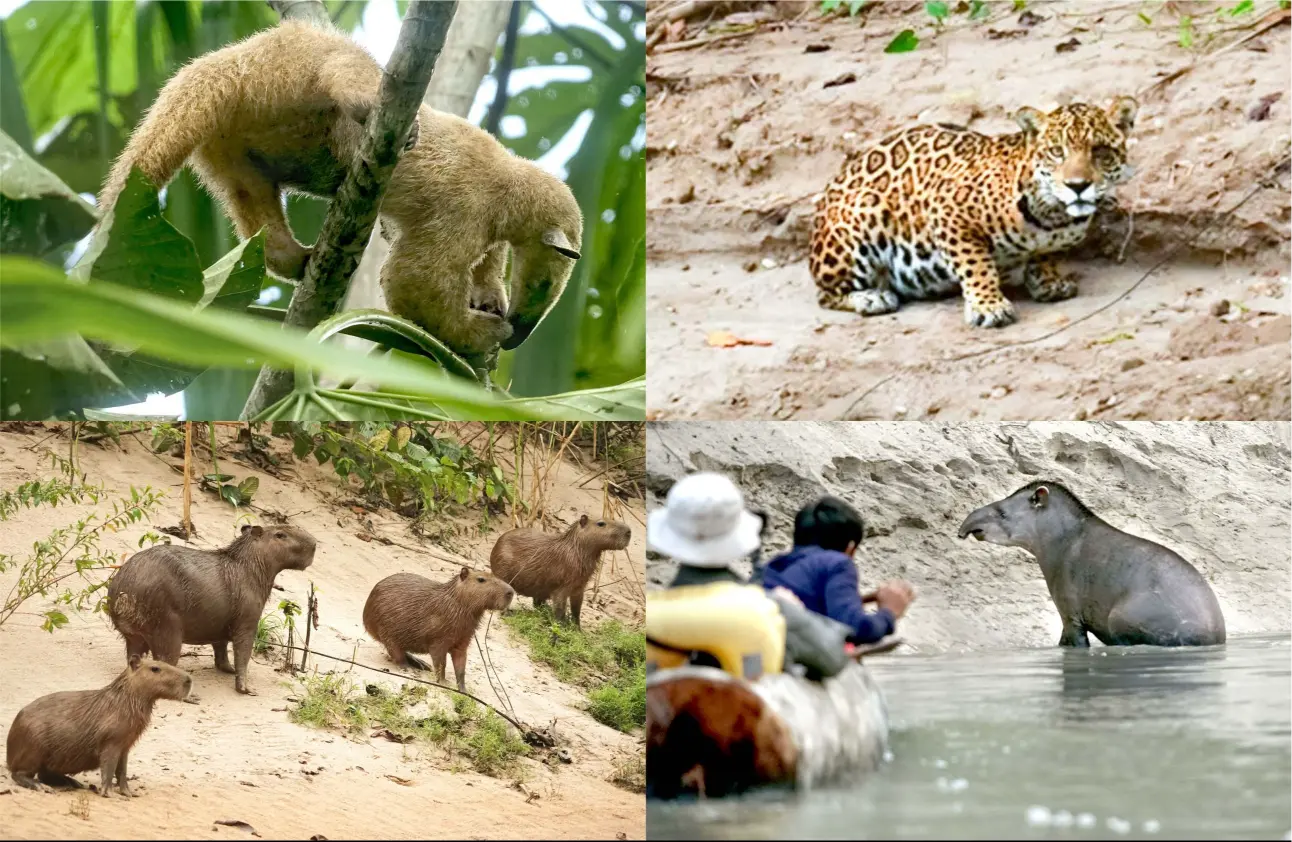
The vast, continuous forests of Sierra del Divisor provide enough space for large mammals that have disappeared from many more accessible parts of the Amazon.
Jaguar (Panthera onca)
As the undisputed apex predator of the Neotropics, the jaguar requires extensive tracts of undisturbed primary rainforest to hunt and reproduce successfully.
Healthy populations of lowland tapirs (Tapirus terrestris), peccaries, capybaras, and other large prey species allow this magnificent cat to remain the true ruler of these forests.
Giant River Otter (Pteronura brasiliensis)
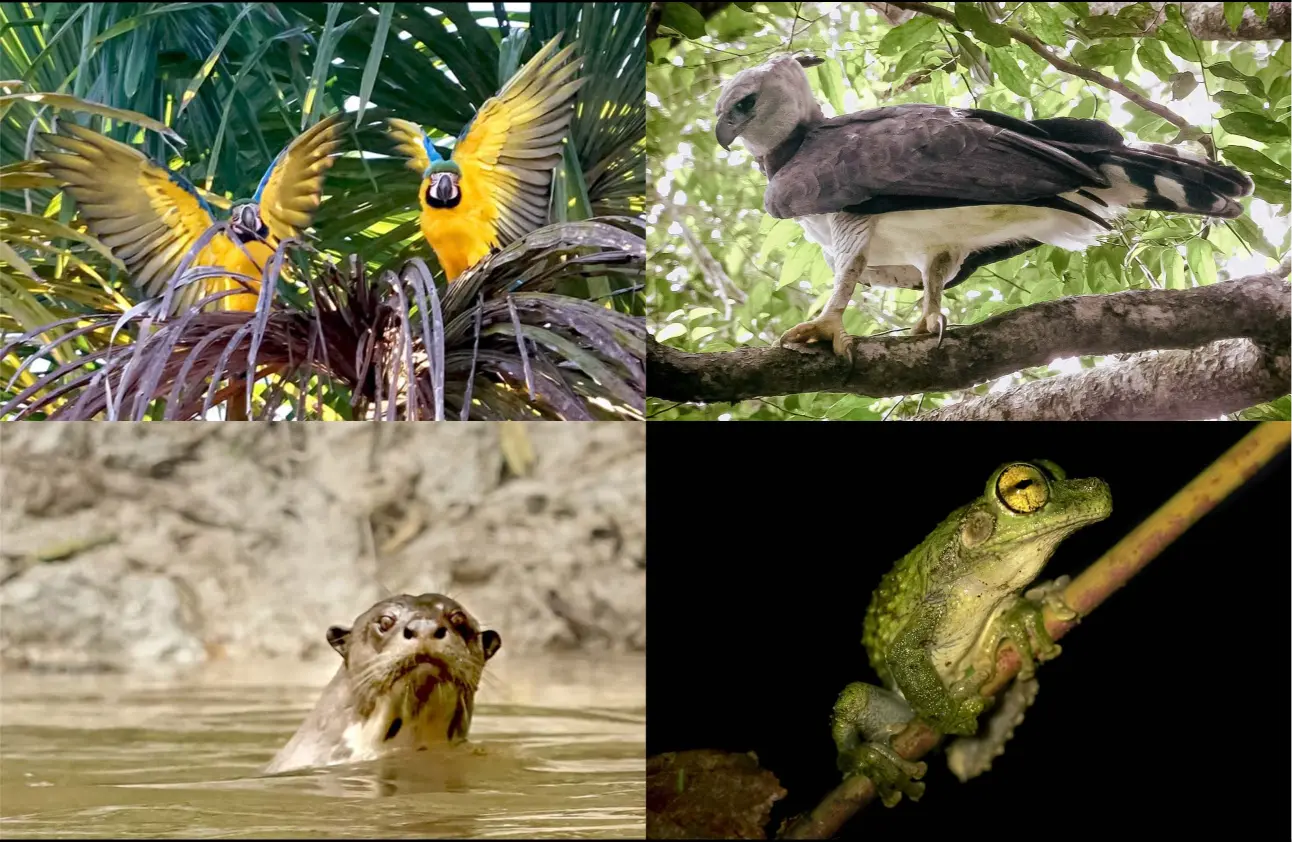
Families of giant river otters still inhabit the park’s secluded oxbow lakes, quiet lagoons, and fish-rich waterways.
Highly social and extremely vocal, these endangered predators hunt cooperatively in some of the most pristine freshwater habitats remaining in the Amazon.
Giant Armadillo (Priodontes maximus)
Rarely seen because of its nocturnal habits, the giant armadillo thrives in the stable soils of the park’s upland terra firme forests.
Its powerful claws allow it to excavate extensive burrow systems that also provide shelter for numerous other animal species, making it an important ecosystem engineer.
Birdlife and the Endemic Acre Antshrike
For birdwatchers and ornithologists, Sierra del Divisor is considered one of the most exciting destinations in the western Amazon.
The combination of lowland rainforest, rocky ridges, sandstone outcrops, and specialized white-sand dwarf forests has produced an exceptionally diverse bird community.
Acre Antshrike (Thamnophilus divisorius)
Among the park’s most remarkable birds is the Acre antshrike, a species discovered only recently by science.
This small passerine is endemic to the nutrient-poor dwarf forests of Sierra del Divisor, where it occupies an extremely restricted range. For experienced birders, seeing, or even hearing, this elusive species in its natural habitat is considered a lifetime achievement.
The park’s towering cliffs and sandstone ridges also provide nesting sites for magnificent birds of prey such as the harpy eagle (Harpia harpyja), while its undisturbed riverbanks host spectacular natural clay licks (collpas), where flocks of scarlet macaws and blue-and-yellow macaws gather daily to feed on mineral-rich clay.
Rivers Teeming with Life: Reptiles and Fish
The contrast between sediment-rich Amazonian rivers and the crystal-clear streams flowing from the Sierra del Divisor highlands creates a remarkable diversity of aquatic habitats.
Giant Reptiles
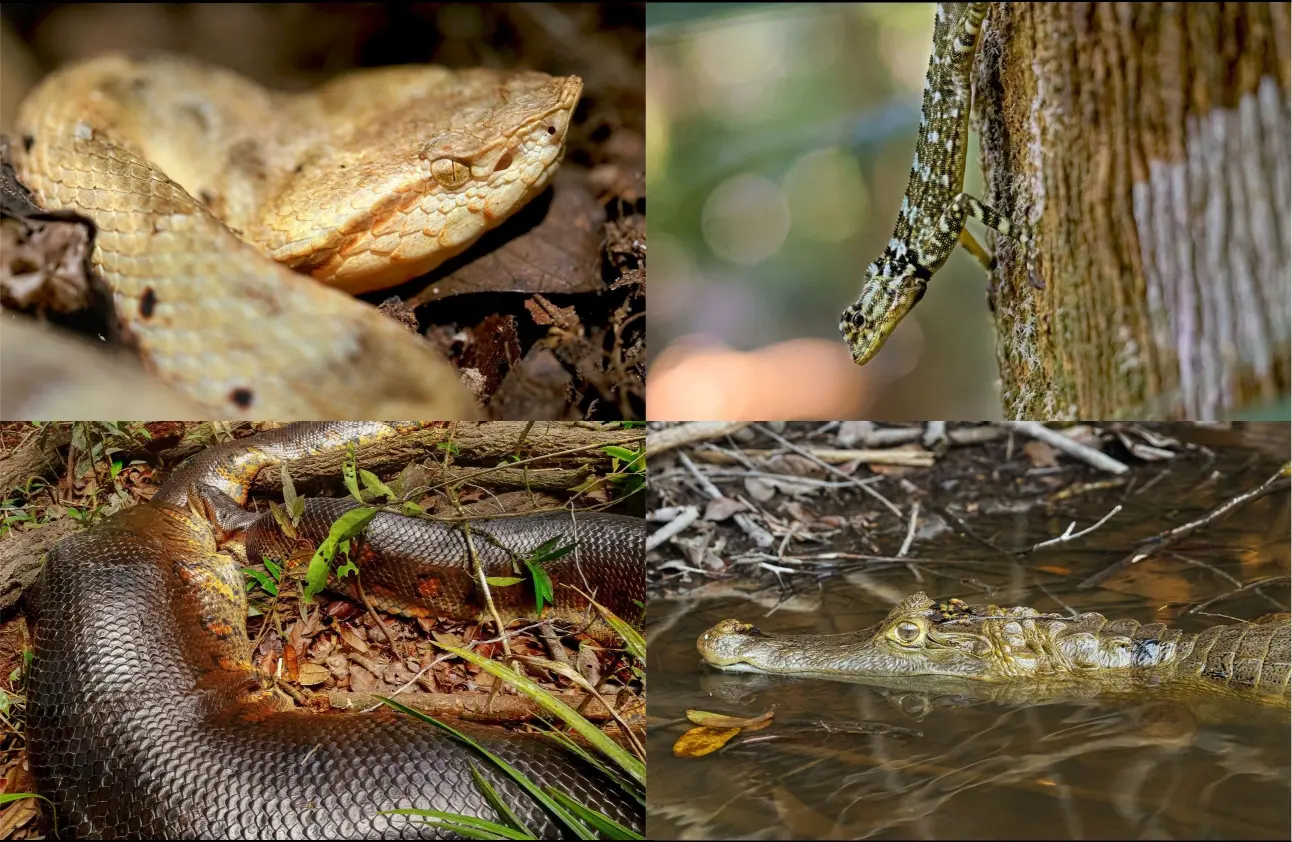
The park’s quiet lagoons and oxbow lakes are home to two of the Amazon’s largest reptiles:
- Black caiman (Melanosuchus niger), which can exceed five meters (16 feet) in length.
- Green anaconda (Eunectes murinus), the world’s heaviest snake and one of the Amazon’s most iconic predators.
These top predators play an essential role in maintaining healthy freshwater ecosystems.
Crystal-Clear Stream Communities
The transparent, fast-flowing streams descending from the mountain ridges support specialized fish and amphibian communities adapted to exceptionally clear, oxygen-rich water.
Unlike the sediment-laden waters of the main Amazon River, these mountain streams provide ecological conditions that allow many highly specialized aquatic species to thrive.
Conclusion
The extraordinary wildlife of Sierra del Divisor is far more than a collection of remarkable species. It is an intricate web of life that has evolved and persisted for thousands of years in one of the most isolated regions of the Amazon.
From the brilliant red face of the Ucayali bald uakari to the silent footprints of the jaguar, every species plays an essential role in maintaining the ecological balance of this untouched wilderness.
Protecting Sierra del Divisor is not simply a regional conservation objective, it is a global responsibility to safeguard one of the last places on Earth where nature continues to function largely undisturbed.
👉 In Part 4
Indigenous Peoples of Sierra del Divisor: We will explore the human and cultural heart of this ancient landscape, discovering the history, traditions, and enduring legacy of the Indigenous peoples who have protected these forests for generations. From the Matsés and Isconahua to Indigenous groups living in voluntary isolation, we will examine their profound spiritual connection to the rainforest and why safeguarding their ancestral territories is essential for the long-term survival of the entire ecosystem.