The Jaguar (Panthera onca) holds the title of the largest cat in the Americas and ranks as the world’s third-largest feline species.
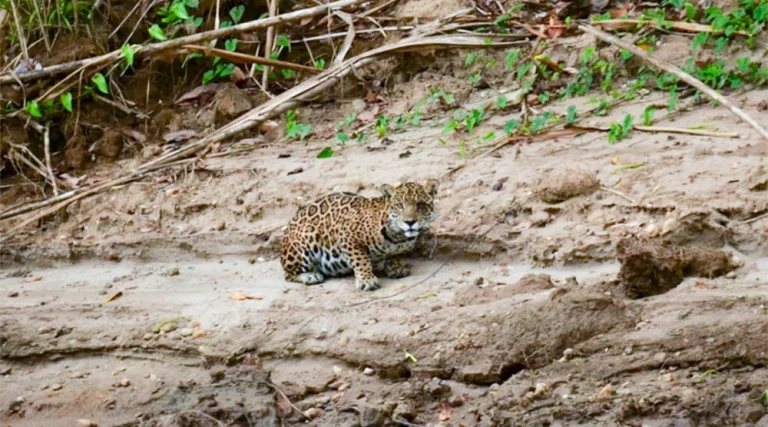
The Jaguar, with a weight that can reach up to 150 kilograms, exhibits a reddish-yellow fur with a predominantly white underside on the legs.
Notably, the color is paler inside the ears, at the base of the nose, jaw, throat, and other lower parts of the body.
It has distinctive black spots in rosette shapes round, oblong, or irregular on its sides and back, forming parallel lines. These markings are smaller on the head, neck, and legs.
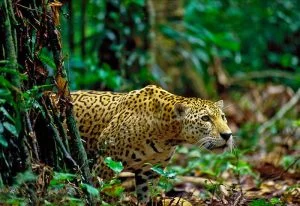
The jaguar’s tail is adorned with rings near its hindquarters, and each jaguar possesses a unique pattern of spots. Females, on average, are 10 to 20 percent smaller than their male counterparts. The jaguar’s body measures between 1.70 and 2.30 meters in length, with a shoulder height of approximately 85 centimeters. The tail ranges from 45 to 75 centimeters in length.
The life expectancy of a jaguar in captivity is around 22 years, whereas in the wild, it is typically around 10 years, with rare instances where they may reach up to 20 years.
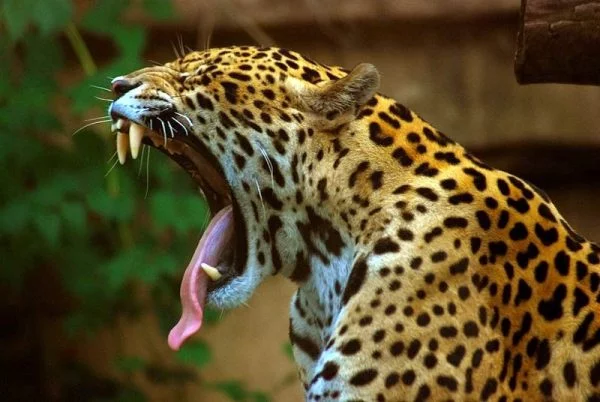
The Jaguar is more active during dusk and night, utilizing its speed and short-distance running ability to efficiently hunt prey, primarily on the ground.
This formidable feline is an adept swimmer, able to cross wide rivers. As an opportunistic carnivore, the Jaguar’s diet varies with the availability of prey in its habitat.
More than 85 species have been documented in the jaguar’s diet (Seymour 1989).
Large prey such as peccaries, tapirs, and deer are among its favorites, but the jaguar is known to consume a wide range of other mammals, including monkeys, sloths, frogs, turtles, and snakes. Surprisingly, these powerful cats can even take on alligators, despite the reptiles being significantly larger. Jaguars also include fish in their diet and prey on ground-nesting birds.
The Jaguar is renowned for its less social and more solitary nature; it actively seeks a female only during the mating season. After fertilization, the female undergoes a gestation period lasting 93 to 110 days, ultimately resulting in the birth of 1 to 4 cubs in a secure location amidst the dense forest or within a tree hole near a stream.
Females typically reach sexual maturity between two and two and a half years of age, while males achieve this milestone between three and four years old. The last reproductive cycle typically occurs around the age of eight.
The number of names for the jaguar is truly remarkable, varying significantly from country to country. However, in most regions, it is commonly referred to as ‘Tigre,’ owing to the perceived resemblance noted by the first conquerors of America to the large Asian feline. Emphasizing its scientific name (Panthera onca) when discussing the jaguar in widely disseminated contexts is crucial. Here is a list of some of its nicknames:
Peru: Otorongo / Tigre
Bolivia: Jaguar / Tigre Americano
Colombia: Jaguar / Mancueva
Ecuador: Jaguar / Tigre
Panama: Jaguar / Tigre
Venezuela: Daaba (Bari) / Ira (Yanomami)
Brazil: Onça pintada / Onça canguçu
French Guiana: Tig Marqué
Paraguay: Yaguareté
Surinam: Penitigri
Argentina: Tigre / Jaguar / Yaguarete
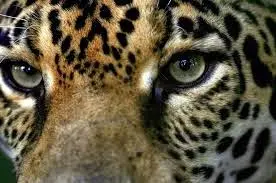
Jaguars are classified as vulnerable or endangered due to the dual threats of trophy hunting and poaching for their fur, coupled with the ongoing loss of their natural habitat, which collectively imperils their survival.
Scientific Classification
| Superkingdom | Eukaryota |
| Kingdom | Animalia |
| Filo | Chordate |
| Class | Mammal |
| Order | Carnivore |
| Family | Felidae |
| Genre | Panthera |
| Species | Onca |