The Amazon rainforest is one of the richest and most diverse ecosystems on the planet, hosting thousands of species of animals and plants that coexist across various habitats. However, it is also inhabited by creatures that pose threats to humans. From feared predators like the jaguar to small but deadly insects, the Amazon is home to a wide range of animals whose defensive behaviors or venomous characteristics can be lethal.
Understanding these animals is not only fascinating but also essential for anyone venturing into this wilderness. Below, we present a series of articles that will introduce you to some of the most dangerous animals that inhabit the jungle.
REPTILES
Squamata (snakes)
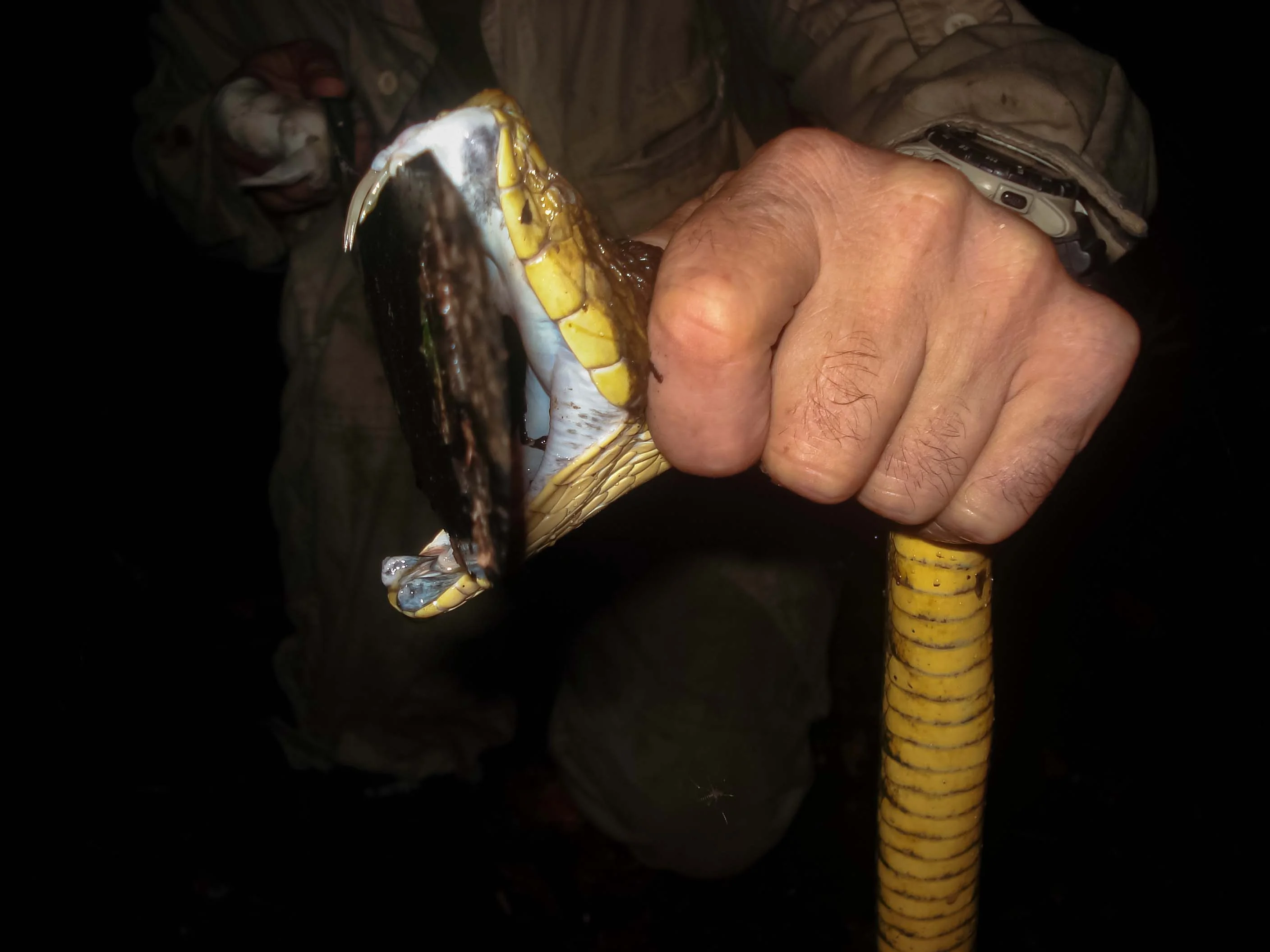
The Amazon is home to numerous species of venomous snakes, such as the fer-de-lance (jergón), the bushmaster (shushupe), and the coral snake, whose bites can be fatal if not treated promptly. While they pose a risk to humans, it is important to remember that most of these snakes tend to avoid contact and will only attack in self-defense, meaning when they feel threatened.
Among the most dangerous snake species in the Amazon are:
- Bothrops atrox: Commonly known as the jergón or fer-de-lance, this snake is one of the most dangerous in the Amazon. It can grow up to two meters in length and is characterized by its brown coloration with dark patterns, which provide excellent camouflage against the jungle floor. Aggressive by nature, it typically bites in self-defense, injecting a potent venom that can cause inflammation, necrosis, and, in severe cases, death if not treated promptly. Its adaptability and ability to blend into its surroundings make it one of the most feared snake species in the Amazon. This viper is responsible for the majority of snakebite incidents in the Amazonian region.

- Lachesis muta: Known as the shushupe or bushmaster, this is the largest and most feared venomous snake in the Amazon, exceeding three and a half meters in length (around 11.5 ft). Its brown coloration and dark patterns enable it to camouflage effectively among the leaves on the jungle floor, where it typically resides in humid, densely vegetated areas. The shushupe is capable of injecting large quantities of venom with a single bite, which can lead to severe effects such as hemorrhaging, respiratory failure, and, if not treated promptly, death. Despite its size and potential danger, this snake generally avoids contact with humans, attacking only when it feels threatened.
- Bothrops bilineatus: Locally known as loro machacho, is a venomous snake primarily found in the Amazon region. This species is arboreal, meaning it spends a significant portion of its time in the trees. It plays a crucial role in maintaining ecosystem balance, as it feeds on small mammals, birds, and reptiles. It is feared by locals due to its ability to camouflage in the tree foliage.
- Eunectes murinus: Commonly known as the anaconda or green anaconda, it is the largest snake in the world by weight and one of the longest, rivaling the reticulated python (Malayopython reticulatus). It can exceed 8 meters in length and weigh more than 200 kg. This formidable serpent inhabits the rivers, lakes, and swamps of the Amazon. Although it is not venomous, the anaconda is a powerful constrictor that captures its prey by coiling around them to suffocate them. Despite its impressive size and strength, attacks on humans are extremely rare, as anacondas do not consider people as prey and prefer to avoid contact. However, they could pose a danger to small children.
Crocodilia (caimans and crocodiles)
The Amazon rainforest is home to several species of caimans that can pose a risk to humans due to their size, strength, and hunting habits. Among the most dangerous is the black caiman (Melanosuchus niger), the largest predator in Amazonian rivers and one of the largest reptiles on the American continent, alongside the Orinoco crocodile (Crocodylus intermedius). Although attacks on humans are rare, the black caiman is considered potentially dangerous, particularly in areas where it shares its habitat with local communities and other species.
- Melanosuchus niger: The black caiman is the largest reptile in the Americas and one of the top predators in the Amazon, reaching lengths of up to six meters. Its impressive size, combined with a powerful bite and nocturnal hunting habits, makes it a formidable predator. Although attacks on humans are rare, they can occur if individuals venture too close to the caiman’s nests or if they invade its territory.
- Crocodylus intermedius: Commonly known as the Orinoco crocodile, it is slightly smaller than the black caiman and primarily inhabits the Orinoco basin in Venezuela and Colombia. It can grow up to five meters in length, and despite being endangered, it remains an impressive predator due to its size and strength.

- Caiman crocodilus: Commonly known as the white caiman or spectacled caiman, this species is smaller than the two previously mentioned, reaching a maximum size of about three meters. It is an agile and versatile hunter, capable of adapting to various environments. Its diet consists of fish, birds, and small mammals, making it one of the most common and widespread caiman species in the Amazon. While generally not aggressive, these reptiles can attack if they feel threatened, particularly when someone approaches their nests.
Although these animals are fascinating from both ecological and biological perspectives, they can also pose significant risks to humans. It is essential to understand their behavior and recognize that these species play a crucial role in maintaining the balance of the ecosystem.
Respecting their natural habitats and exercising caution when navigating the jungle environment are vital for ensuring everyone’s safety. Furthermore, following the guidance and recommendations of experienced local guides can help prevent dangerous encounters with these Amazonian species.
Read Part 2, Part 3, and Part 4 of our blog, Most Dangerous Animals in The Amazon Rainforest, to learn more about the incredible fauna of the Amazon!