Our journey through the Amazon continues to unveil the fascinating and sometimes challenging aspects of this natural realm of astonishing diversity. In the first article, we explored the stealthy world of snakes and the imposing caimans and crocodiles. In the second part of this article, we discovered the universe of insects and arthropods whose small size does not diminish their potential danger.
In this third article, we will venture into the waters to discover fish that, with their defenses or habits, deserve our attention and respect. Then, we will delve into the territory of the elusive white-lipped peccary (locally known as “huangana”), the majestic puma, an agile and silent predator, and the iconic jaguar, a symbol of the Amazon’s strength and beauty.
Understanding their behaviors and the necessary precautions to avoid risky encounters will be fundamental for a safe and respectful exploration.
FISH
- Vandellia cirrhosa. Locally known as “canero” or “candirú,” this is a small, parasitic freshwater fish that inhabits rivers and streams. It enters the gills of other fish, feeding on their blood. On rare occasions, it can enter and ascend the human urethra, so it is important to avoid swimming naked and urinating in the water. It is part of the food chain, although its specific role is not as prominent as other predatory fish.

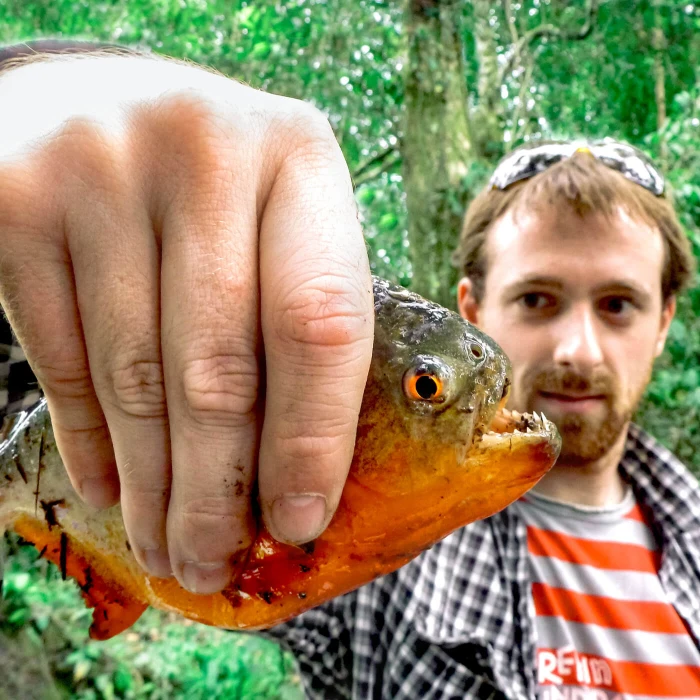
- Pygocentrus nattereri. The piranha is a carnivorous fish that lives in schools in rivers, lakes, and oxbow lakes. They are predators, feeding on other fish. They may attack in groups if threatened or attracted by blood, causing painful bites. Avoid swimming with open wounds and do not throw animal remains into the water. They control populations of other fish and contribute to the nutrient cycle.
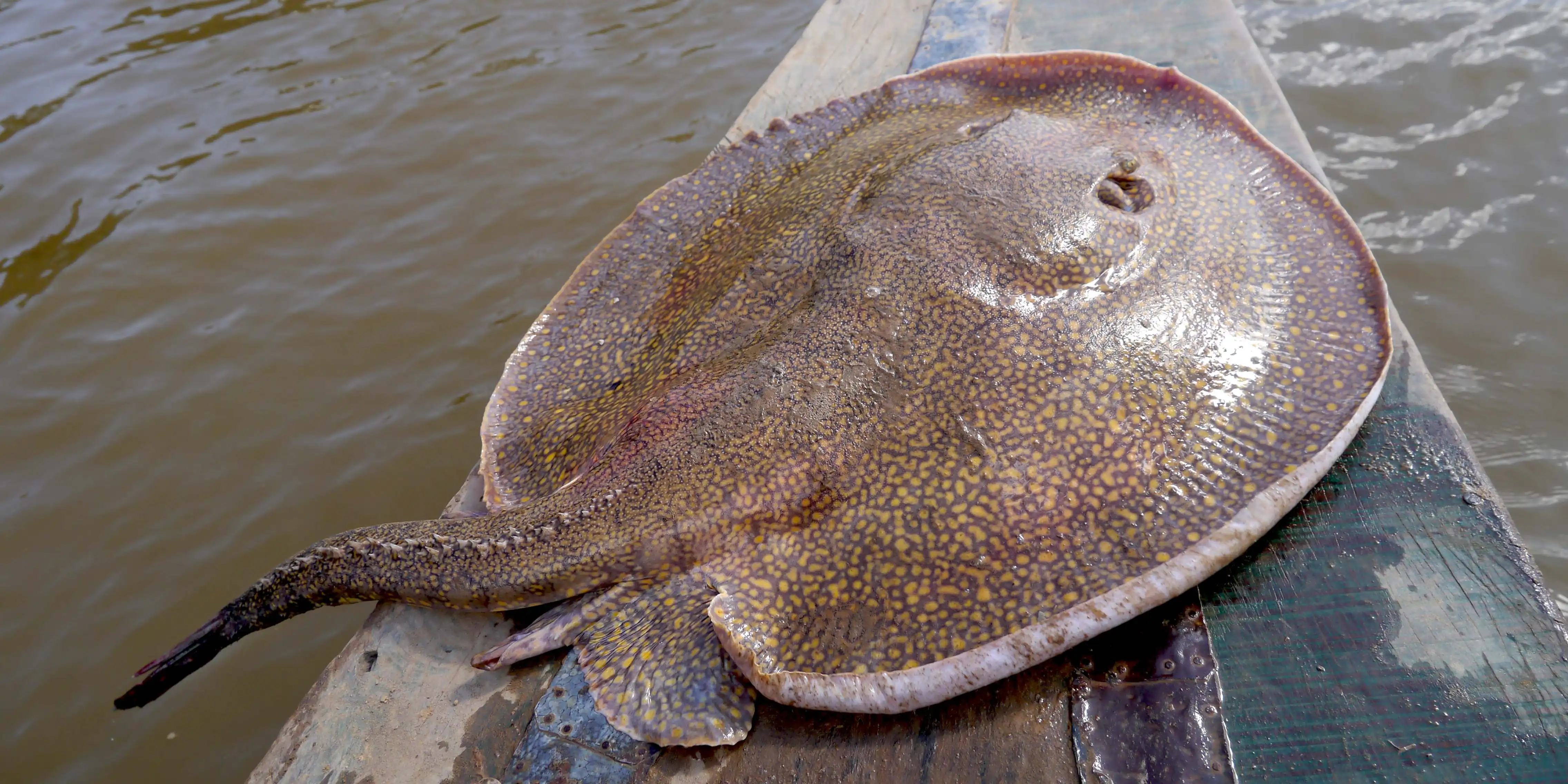
- Potamotrygon spp. The ray is a cartilaginous, flat-bodied fish that inhabits the sandy bottoms of rivers and lakes. Its venomous stinger on its tail is used for defense if stepped on or threatened, causing very painful puncture wounds. Walk cautiously in shallow waters and avoid disturbing the bottom. They are predators of invertebrates and small fish, maintaining the balance in benthic ecosystems.
- Electrophorus electricus and E. varii. The electric eel. This freshwater fish has electric organs capable of generating discharges of 480 to 572 volts. It lives in the turbid waters of rivers and swamps. It uses these discharges to hunt and defend itself, and can cause dangerous shocks to humans, even death in rare cases. Avoid putting limbs in murky water and do not disturb them. They are important predators, regulating fish populations.
MAMMALS
- Tayassu pecari. Locally known as “huangana,” this is an artiodactyl mammal that lives in large groups called “piaras” in the lowland rainforest. They are omnivores, feeding on fruits, roots, and invertebrates. They can be dangerous if they feel threatened or cornered, attacking in groups with bites. Keep a distance and do not try to feed them or approach their young. They disperse seeds and control populations of plants and invertebrates.
- Puma concolor. The puma is a solitary and territorial feline that inhabits diverse ecosystems, including the Amazon rainforest. It is a carnivorous predator. Its diet consists mainly of deer, rodents, and other mammals. Attacks on humans are very rare but can occur if they feel threatened or are injured. Avoid venturing alone into the rainforest.
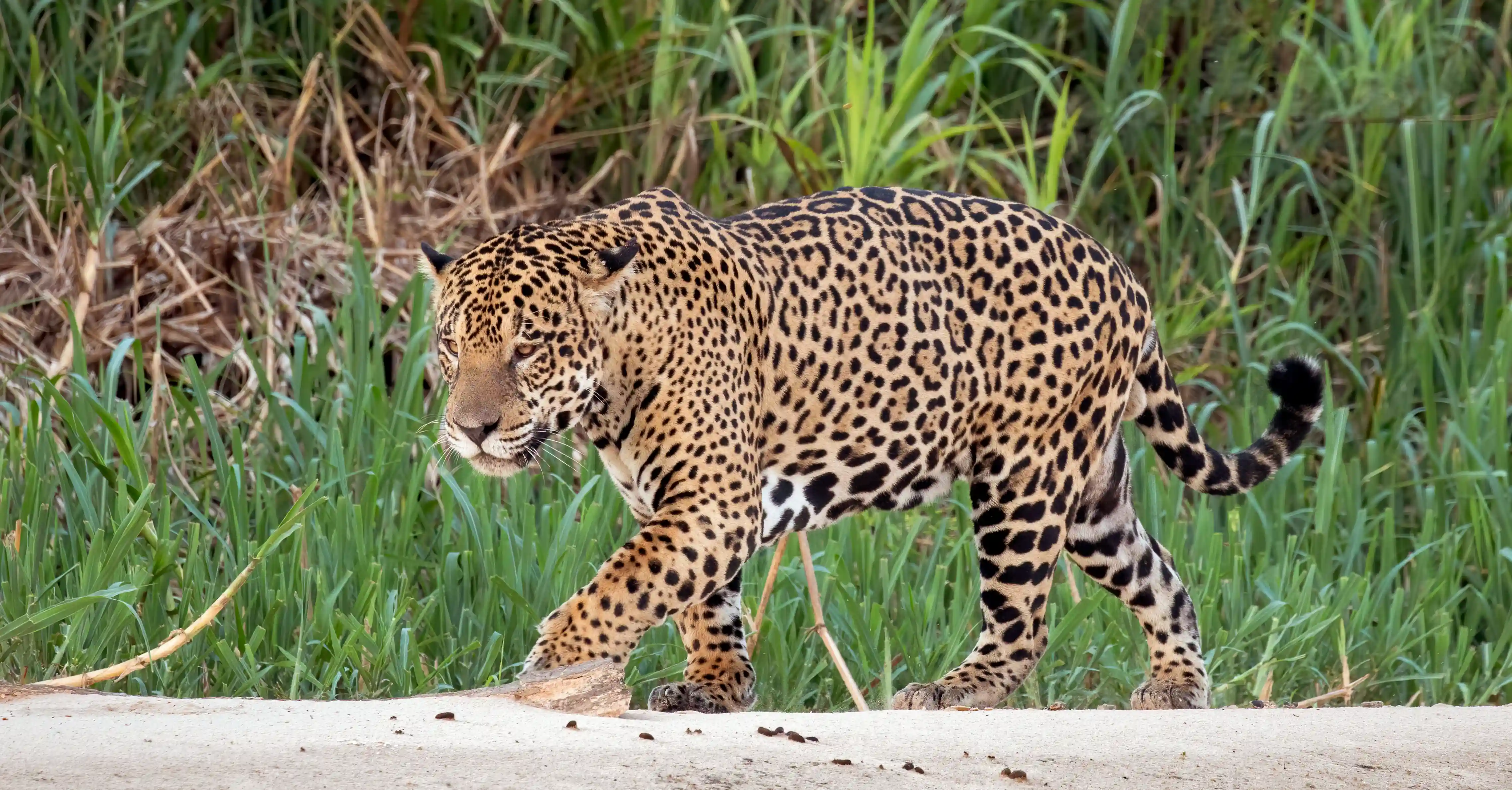
- Panthera onca. Called “jaguar” or “otorongo” this is the largest feline in the Americas, solitary and territorial, inhabiting the rainforest and areas near rivers. It is a predator that hunts a wide variety of prey, from rodents to caimans. Attacks on humans are infrequent but can happen in self-defense or in situations of prey scarcity. It is an important predator for maintaining the balance of the ecosystem.
Read our fourth article to learn more about the incredible fauna of the Amazon!